In this blog from our tech team (previously published on Medium and HackerNoon),, discusses how the team developed a way to help new hires hit the ground running, without unnecessary downtime.
In any tech company, onboarding is a moment of truth. How quickly a new developer gets into the team’s rhythm directly impacts both their motivation and the speed of delivering new features to production.
At inDrive, we operate in a high-paced environment with a constantly evolving product. At the same time, we have two different architectures, two navigation systems, a unique code style, our own git flow, and many nuances in how the project works.
It became clear that the “figure it out as you go” approach no longer worked. We needed a systematic solution to help newcomers take their first steps without unnecessary stress. That’s how our iOS onboarding process was born.
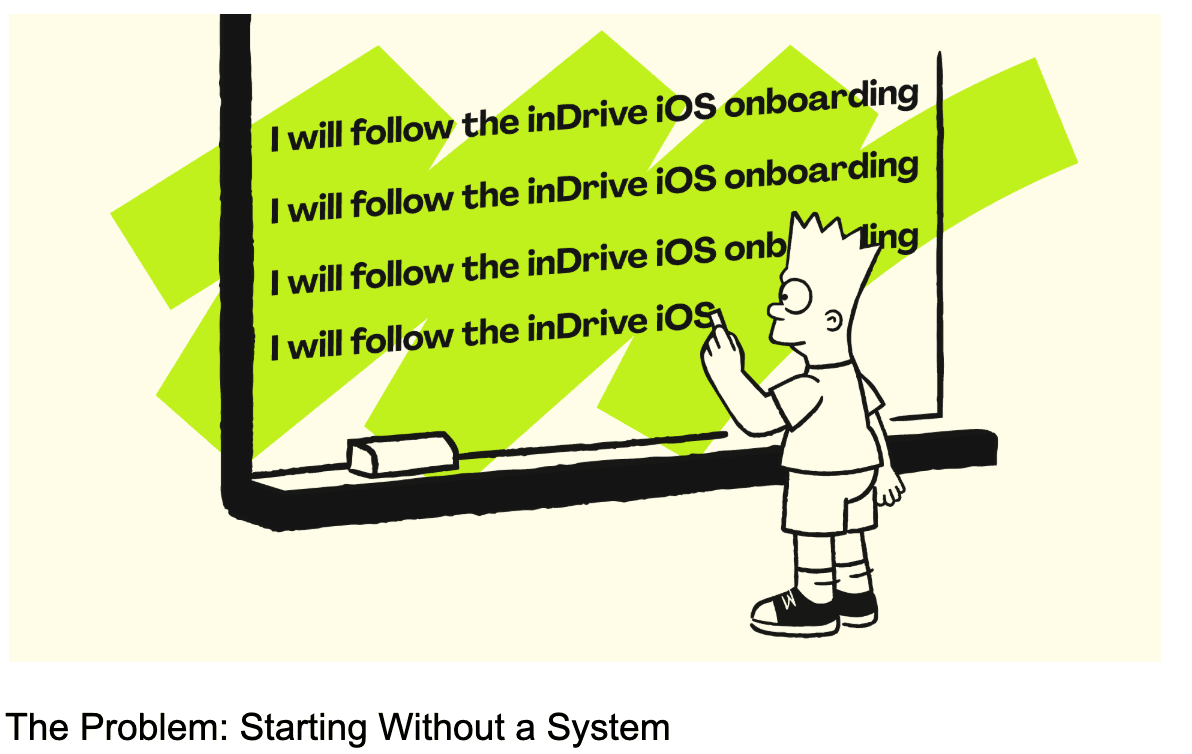
Previously, a new iOS developer would jump straight into a large project built on UDF (unidirectional data flow). Debugging was not easy: a single event could propagate across dozens of code areas, dependencies were not obvious, and there was little documentation and few established processes.
Moreover, each team implemented UDF slightly differently, adding even more complexity.
Developers would spend weeks — sometimes months — just trying to understand how everything worked. As early as day two, they could receive a product task without knowing the code style, architecture, navigation, networking layer, or even how to properly open a pull request.
The result was predictable: dozens of review comments, multiple iterations of fixes, wasted time, and a higher risk of production bugs due to lack of architectural understanding. Ultimately, this affected business outcomes with delayed releases and lost revenue.
The Solution: A Two-Week Onboarding
To reduce this barrier, we launched a structured onboarding program. This lasts two weeks and takes place in a separate repository — a mini-application that simulates key processes of the real production project.
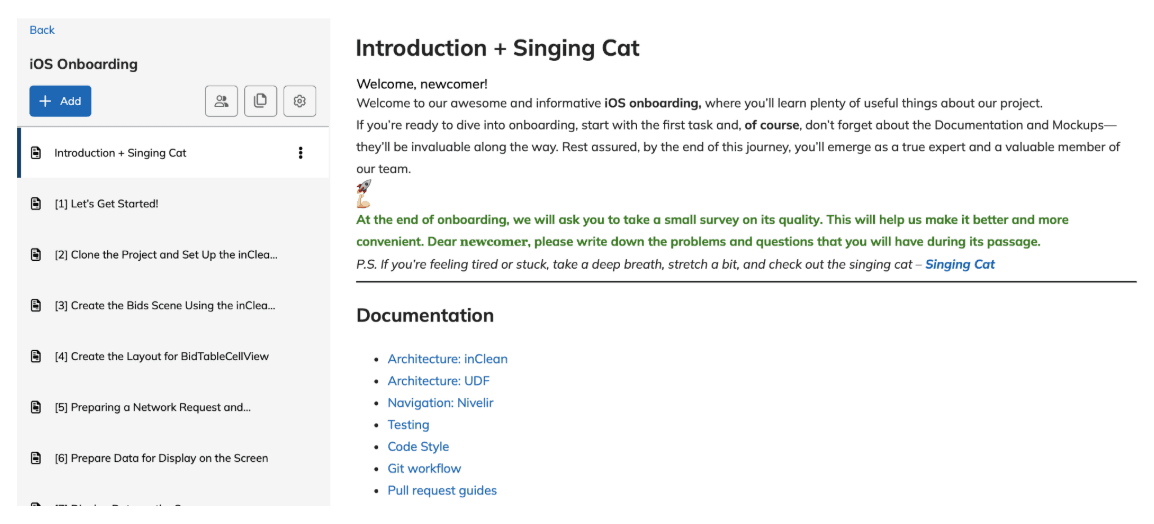
A new engineer gradually learns:
- Two architectures: inClean and UDF
- Two navigation systems: XCoordinator and Nivelir
- Networking and analytics
- Company code style
- Design system usage
- How to open pull requests properly
- How testing is done in the company
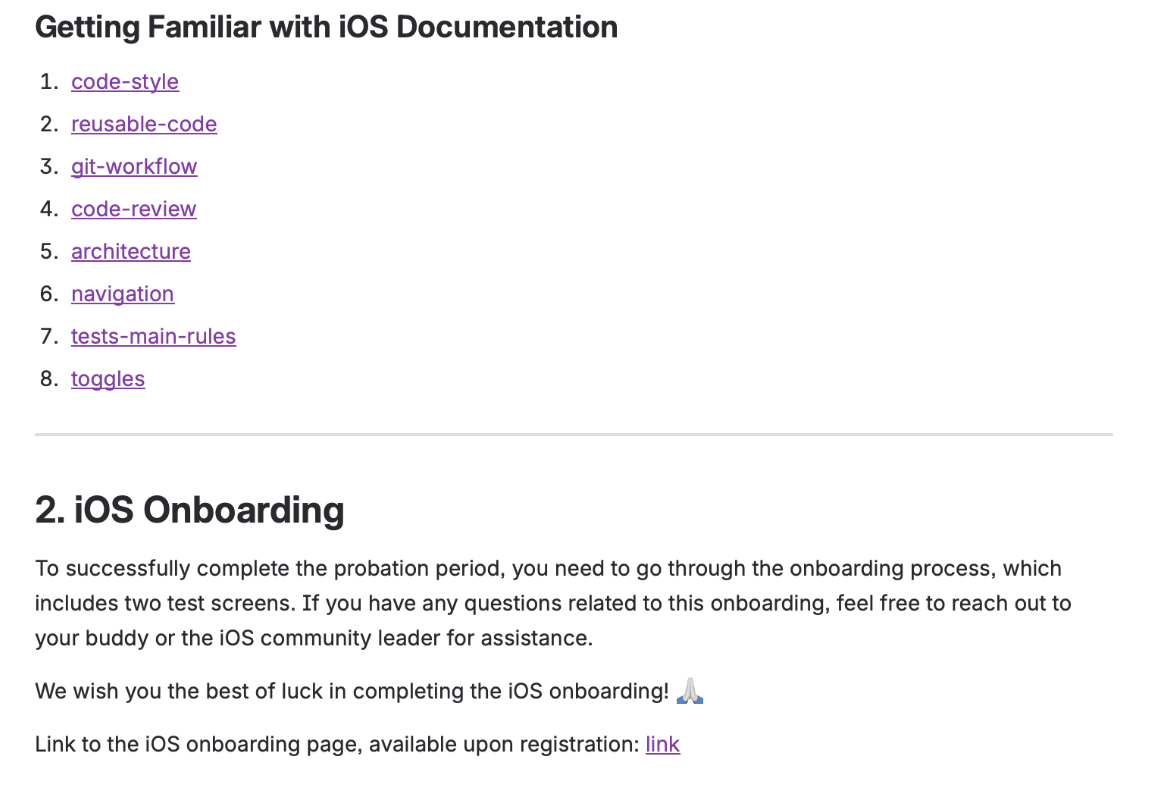
Each topic is reinforced with practice: the developer completes tasks, opens pull requests, and gets feedback from a buddy and the iOS Community Lead.
Previously, developers were left alone with the project. Now, we support each newcomer throughout the onboarding. We regularly sync to check progress and help resolve issues.
Pull requests during onboarding are reviewed in detail — we highlight issues and explain approaches to make future work smoother.
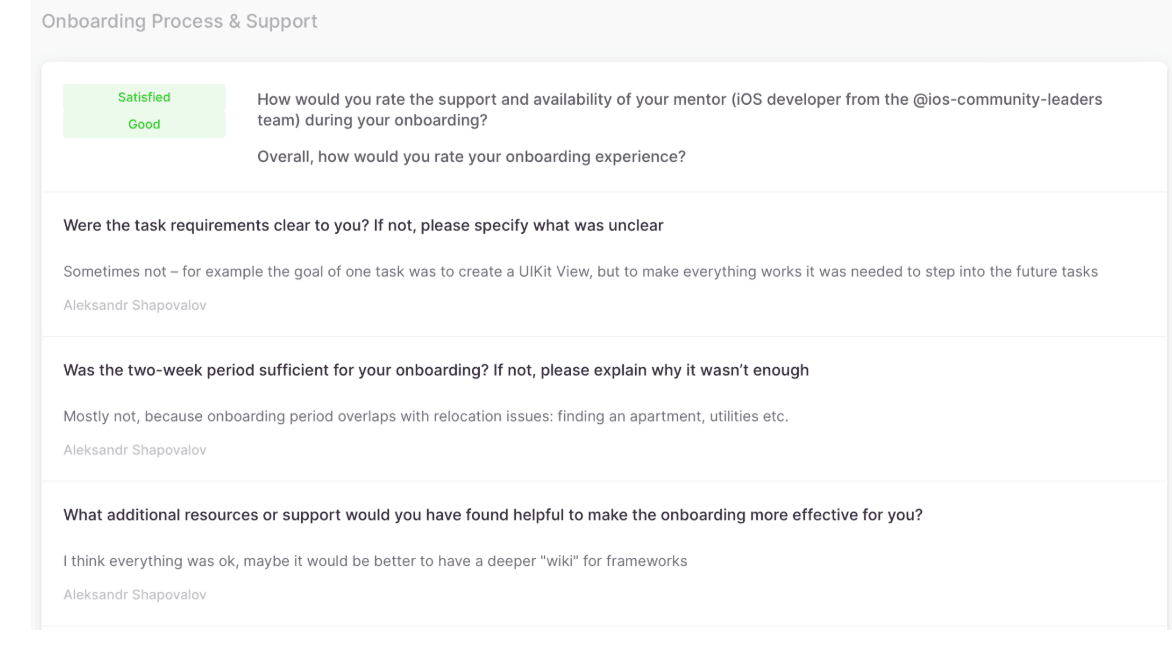
When onboarding concludes, newcomers fill out feedback forms, helping us continuously improve the process.
Saving Time and Improving Quality
Formally, the company “loses” two weeks. In reality, it gains efficiency: without onboarding, developers would spend far more time learning chaotically, while the team suffered from bugs and overloaded reviews.
After onboarding, developers open their first product pull request, already understanding how development processes work.
Additional Benefits
- Reduced error rate: critical production bugs happen less often.
- Early detection of weak candidates: if someone struggles even during onboarding, it’s a signal.
- Continuous feedback: onboarding is regularly improved.
- Community support: newcomers are supported by both a buddy and a community lead.
Scale and Results
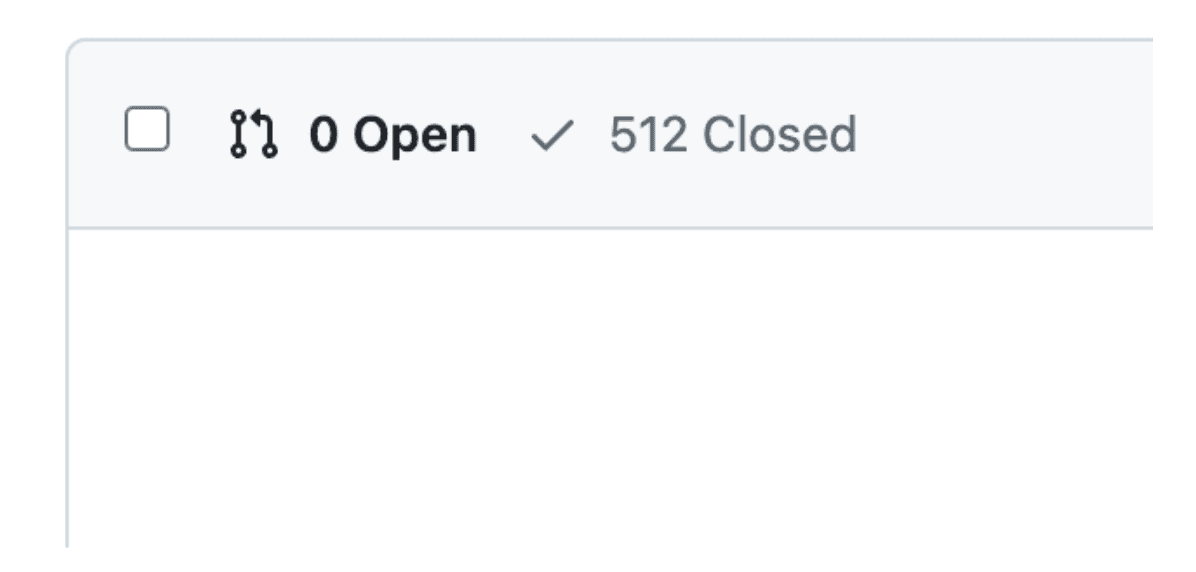
The first version launched on February 7, 2024. Since then, more than 30 developers have completed it, with nearly 500 pull requests created.
Most participants note that they have never seen such an onboarding format before — it helps them understand the project before working on product tasks.
We’ve collected over 30 feedback responses, and the consensus is that this is one of the best onboarding experiences they’ve had.
What’s Next
Our onboarding continues to evolve: the team collects feedback, refines tasks, and improves structure.
This is not just a course for newcomers — it’s a tool for maintaining quality, reducing errors, and building a strong iOS engineering community at inDrive.
We’ve concluded that onboarding is not just a formality. It’s a strategic tool that helps people unlock their potential faster and enables the business to move quicker and more reliably.
For us, it has become part of our culture: we invest in learning processes as seriously as we invest in the product itself.