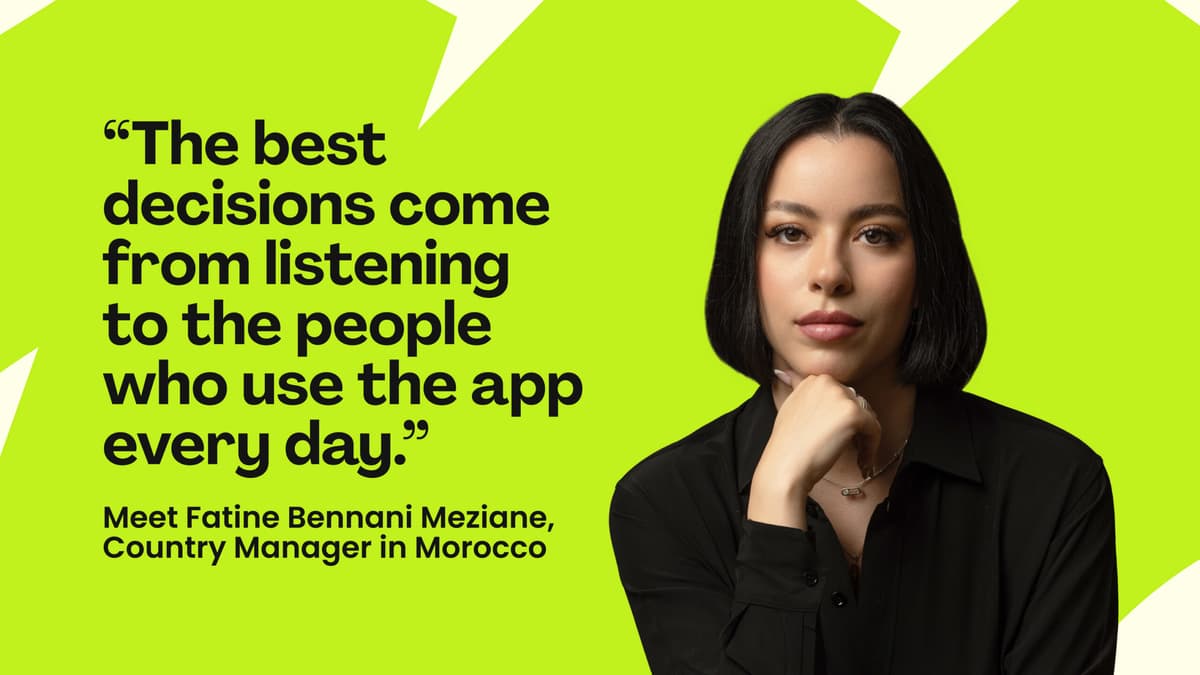
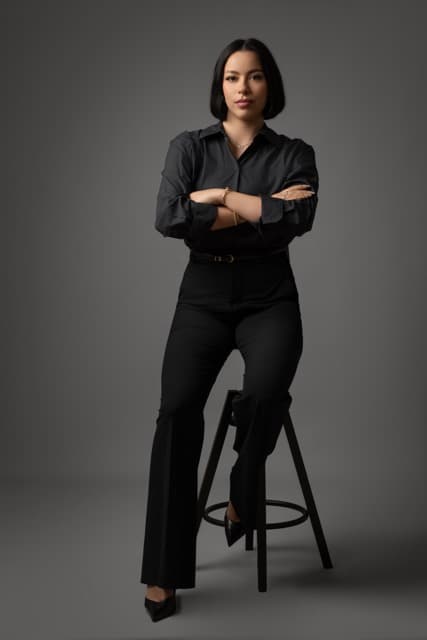
Fatine describes her path in mobility as a gradual one. Having started in marketing in 2018, she moved into operations and then management. She later led a delivery business in Senegal, before taking on her current role with inDrive. We asked her about inDrive in Morocco, and what every visitor to the country should see.
I grew up in Casablanca, the city where I built most of my reference points, so I’ve seen first-hand how much Morocco moves. Casablanca, Rabat, Marrakech and Tangier keep growing, and people travel between cities all the time: students going home for the weekend, families visiting relatives, professionals heading to meetings in another region. Trams, trains, buses and taxis all play their part, and more and more journeys now start on a phone.
Why I took this role: In the mobility industry, you see the effect of your work every day: a driver earning an income on their own terms, a student getting home safely, a family travelling to see relatives. Leading that in Morocco, and helping the wider region grow, was an opportunity I couldn’t turn down.
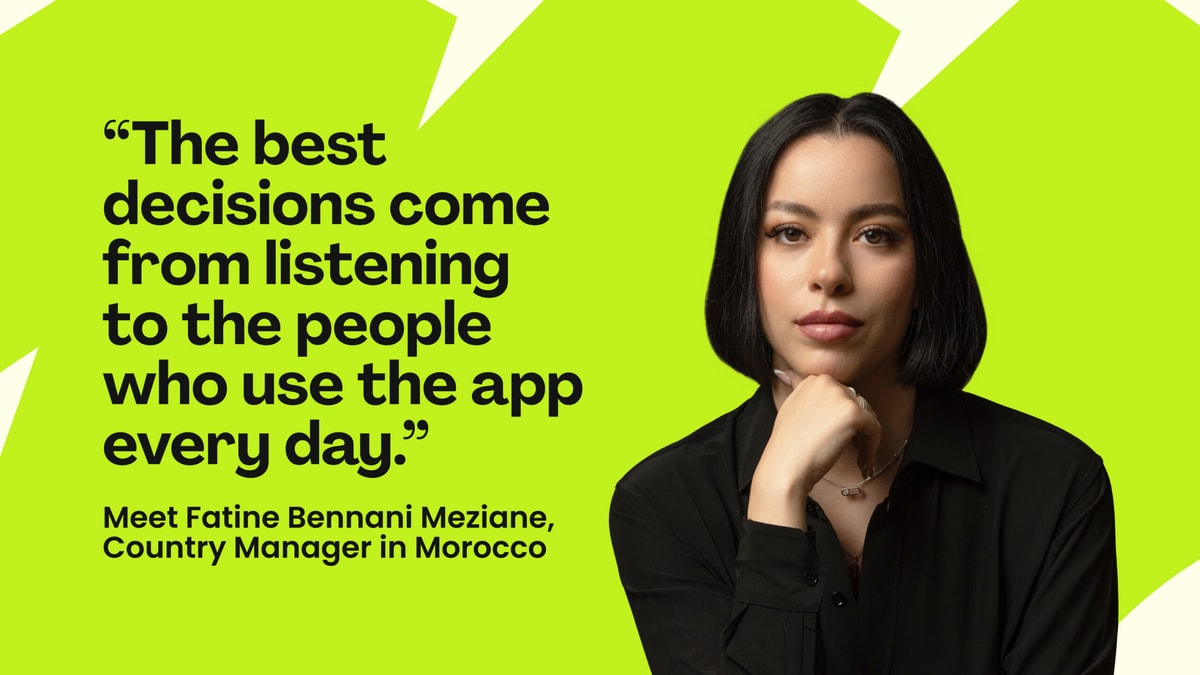
"The best decisions come from listening to the people who use the app every day.”

What makes me proudest today is our Moroccan team. Behind the app, there are more than 30 Moroccan talents who put their skills, creativity and knowledge of this country into everything we build. Together, we create income opportunities for drivers all over Morocco, income that for many of them helps support a family. And we do it as a company rooted in Morocco, proud to play our part in the country’s economy and to grow alongside it. Building something for Morocco, with Moroccans, is what I love most about this job.
The product feature I’m proudest of is also the newest. Since October 2026, all inDrive rides and deliveries in Morocco are insured, for drivers and passengers alike. People often ask me what happens if something goes wrong on a ride. Now I can answer: your ride is insured. When I announced it to 100 of our drivers at our safety day in October, the whole room broke into applause.
"When I announced it to 100 of our drivers at our safety day in October, the whole room broke into applause."
Insurance sits alongside the tools that help two strangers trust each other before a trip starts. In many Moroccan cities, new passengers complete a quick live photo check, called Liveness Check, before their first ride, and drivers complete regular selfie checks so passengers know the person behind the wheel is the one registered on the app. Passengers can also share their ride in real time with up to five trusted contacts, calls go through the app so nobody has to share a phone number, and an SOS button connects to emergency services.
In Morocco, inDrive has grown into a super app, one place for the services that matter most in daily life. Inside the city, people ride by car or by motorbike, which is often the fastest way through rush-hour traffic.
City to City connects passengers with drivers who are already travelling between cities, so a student can get home for the weekend or a family can reach a wedding on the other side of the country.
With Delivery, individuals and small businesses can send anything across town, from a small parcel to a new fridge or a shopkeeper’s stock. Whatever the service, the same principle applies: people agree on a fair price together.
The super app is also opening up to brands. With inDrive Ads, now available in Morocco, companies have a new way to reach people where they are most attentive: inside the app, while they wait for their ride or follow their trip. At that moment people are focused on their journey, so a brand’s message gets noticed instead of disappearing in a feed. Our ads don’t scroll.
In Morocco, agreeing on a price is part of everyday life. We discuss prices in the souk, with the plumber and with the neighbourhood grocer, and both sides expect to be heard. So when people discover that on inDrive the passenger proposes a fare and the driver can accept it or make a counter-offer, it feels familiar. It reflects something very Moroccan: a fair price is the one both people agree on. Here, the human relationship comes first, and a platform only earns people’s trust if it respects that.
“Our Fair Play campaign made four young street footballers the faces of inDrive … What I remember most is the idea behind it: every Lion starts somewhere.”
Football is part of who we are in Morocco. When the country hosted the Africa Cup of Nations last winter, big brands signed star players – but many talented kids were still playing in the street, next to traffic, without proper pitches or gear. We asked ourselves whether that was fair. So instead of a celebrity deal, our Fair Play campaign made four young street footballers the faces of inDrive, with real partnerships, football gear, visibility and access to training. Dozens of other young players also received gear and new opportunities. It went on to win Gold at the Dragons of MENA awards, but what I remember most is the idea behind it: every Lion starts somewhere.
And then, at the end of September, 120 children of inDrive drivers in Casablanca, aged 8 to 18, started free coding and AI classes with Algorithmics, an international coding school. Over 12 weeks, in small groups, they learn Scratch, Python, the basics of AI and digital skills. Their parents spend their days on the road keeping the city moving, and these classes give their children access to skills that open up a whole new range of careers.
But if I had to choose my favourite projects here, I’d say Fair Play, because in Morocco football is more than a game. It is a passion we share from the street to the café terrace. When the Lions play, the whole country stops to watch. With the World Cup coming to Morocco in 2030, every child kicking a ball in the street is dreaming of that stage, and giving a few of them a real chance meant everything to us.
The biggest surprise since I took on the role of country manager has been how many women have chosen to get behind the wheel. More than 2,000 women drive with inDrive in Morocco today, in a job that has long been seen as a man’s.
"Every trip they take also changes how people see women at work, and that is what has surprised and moved me the most."
They also keep me close to the product. One morning, one of them sent me a screenshot of a bug with the message “Zine, sbah nour”, a warm Darija greeting that roughly means “good morning, lovely”. It was probably the warmest and most Moroccan bug report I’ve ever received. Our support team handles thousands of tickets every day, and messages like hers are how real problems on the road turn into fixes.
Last March, we celebrated International Women’s Day by sharing an iftar with some women drivers on the 27th night of Ramadan, followed by a henna evening with their children, as Moroccan families traditionally do on that night. Listening to them, I heard why they started: to be independent, to support their families, or simply to create new opportunities for themselves. One driver shared that she had been out of work for about four years before she started driving with us. Every trip they take also changes how people see women at work, and that is what has surprised and moved me the most.
My favourite Moroccan dish is couscous, and above all my mother’s couscous with tfaya, the sweet caramelised onions and raisins served on top. Shared on a Friday from one big plate with the whole family around the table, it’s hard to get more Moroccan than that.
The one place every visitor should visit is the sea, wherever it is. With the Atlantic on one side and the Mediterranean on the other, Morocco has no shortage of it. Give me sun, sand and turquoise water, and that’s where I feel best and switch off completely.
What I like most about my country: The hospitality. In Morocco, you can be invited for mint tea after five minutes of conversation, and a stranger will walk you to the address you’re looking for rather than just pointing the way. Working in Senegal, where teranga, the culture of hospitality, is just as strong, made me even more aware of how much this generosity shapes daily life in both countries.