This February, we thought we’d take a different approach to celebrating Valentine's and the month of love (after all, roses and chocolate can get a little repetitive). Instead of rhapsodizing about romance, we’re celebrating a greater love, featuring some of the amazing projects that people are doing (outside of work) to help and inspire others.
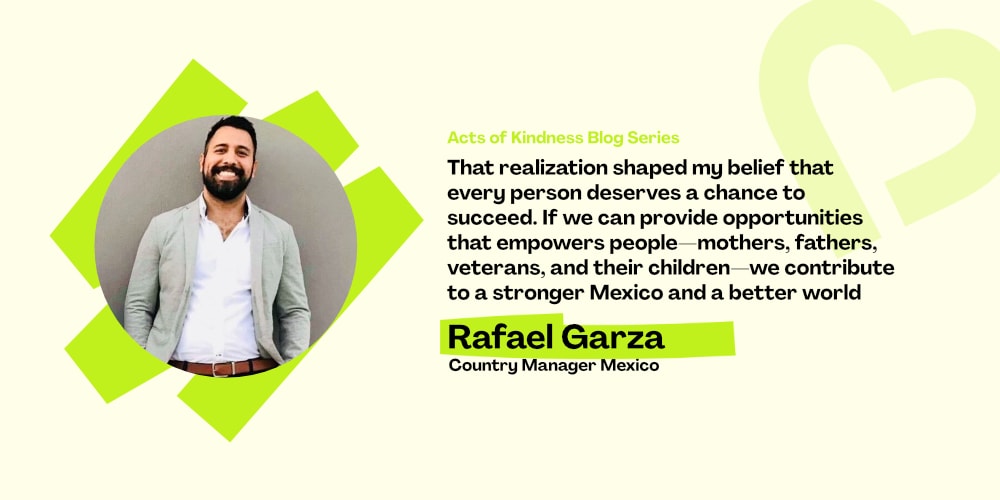
Our first feature shines a light on Rafael Garza, the founder and leader of the first and only Foundation for Mexican Veterans in his country. Beyond his role as Country Manager for Mexico, Rafael is dedicated to supporting veterans as they transition into civilian life.
We spoke with him about the Foundation’s mission and the inspiration behind it. Here’s what he shared:
A Mission Born from Necessity
In 2016, while working at a delivery company in Mexico, I noticed that many of our couriers had military backgrounds. I began to wonder why so many veterans were entering this line of work. After traveling to various countries through my previous career, I saw how veterans in the U.S., Germany, Turkey, and Korea had access to robust programs that supported their post-service careers.
Curious about the situation in Mexico, I asked them, ‘What opportunities do you have for career advancement?’ Their response was stark: ‘None.’
The Mexican armed forces operate under two main systems. Soldiers either serve a six-year contract and then transition out with no formal support, or they commit to 20–30 years of service and retire with benefits. Each year, more than 15,000 personnel leave the armed forces, yet only 40% receive full retirement benefits. The rest are left to navigate an uncertain future, often taking low-paying security jobs due to a lack of alternatives.
We also found that many of these individuals come from low-income backgrounds, joining the military as a means of financial stability. While they are in service, they have access to formal education—primary, secondary, and even college—yet a six-year contract rarely provides enough time to complete meaningful studies. As a result, when they leave, they struggle to find well-paying jobs and often face stigmatization, being pigeonholed into security-related roles.
Beyond the economic hardship, the social reintegration process is equally challenging. Unlike civilians, military personnel spend years in secluded environments, solely interacting with fellow soldiers. This lack of exposure to civilian life makes it difficult for them to reintegrate, leading to social isolation and marginalization.
Building a Support System
This transition shouldn’t be so difficult, and that’s why we created the Foundation. Our goal is to provide these individuals with the dignity and opportunities they deserve as they move into civilian life. Today, we support around 4,000 veterans each year through four core programs:
Mental Health Support: We provide free psychological therapy, including a specialized PTSD program developed in collaboration with Dr. Garcia at the University of Austin.
Family Assistance: We offer support programs for the families of veterans dealing with PTSD and other challenges.
Employment Opportunities: Partnering with companies, we connect veterans with meaningful job opportunities, help translate their military skills for civilian roles, and prepare them for interviews.
Education and Scholarships: We provide educational support for veterans and their families, helping them gain the skills needed for new careers and a brighter future.
I oversee the Foundation’s operations with a dedicated team of 18 to 25 individuals, including volunteers and interns. Around 40% of our team members hold paid positions. Personally, I donate 30% of my salary to the Foundation. We sustain ourselves through donations from individuals, corporations, and government grants—but we are always in need of more support to expand our impact.”
A Personal Commitment to Change
My passion for this cause stems from my own childhood. When I was six years old, my father left. My mother (R.I.P), uneducated and without resources, did what she thought was necessary—she sent my siblings and me to collect and sell scrap metal, toys, fruits, and vegetables to survive. By the time I was a little older, I realized that children shouldn’t have to work; they should have the opportunity to play and grow.
That realization shaped my belief that every person deserves a chance to succeed. If we can provide opportunities that empower people—mothers, fathers, veterans, and their children—we contribute to a stronger Mexico and a better world.”
How You Can Help
If you’d like to support this mission, here’s how you can get involved:
Volunteer: Reach out at hola@ofec.org.mx
Donate: Visit www.ofec.org.mx/ayudar to contribute.
With more awareness, funding, and participation, we can continue transforming the lives of veterans and their families—ensuring that those who have served our country receive the opportunities they deserve.”