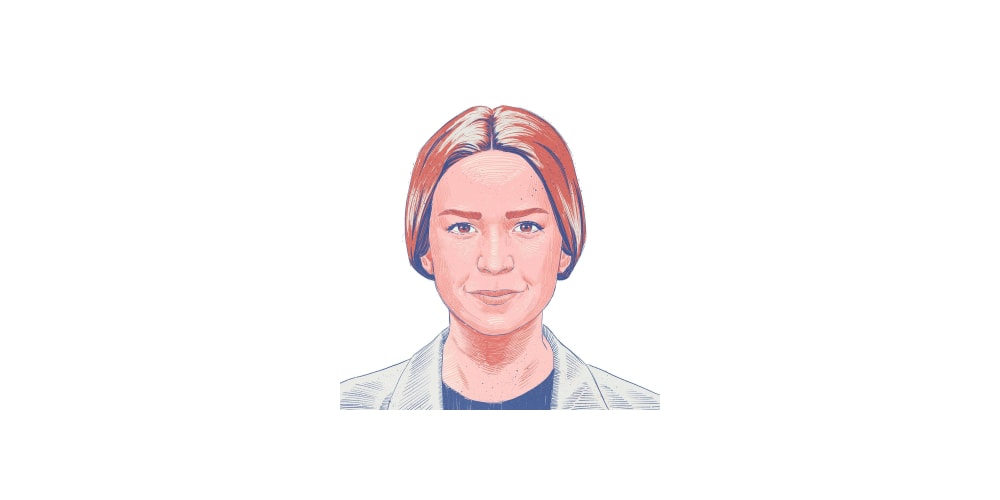
The Aurora Tech team spoke to Hannah Töpler, founder of Intrare in Mexico, and remarkable second-place winner of this year’s Award.
Intrare is a social tech company that builds proprietary AI to eliminate bias from recruitment; their mission is “to match millions of refugees, marginalized women, LGBTIQ+, and other diverse talent with fair jobs to break the poverty cycle”. Here’s what Hannah had to say about her experiences of founding a startup, and how to encourage further women on this path.
When we started out, many companies and outsiders just couldn’t imagine that recruiting diverse talent, without bias, could become mainstream. Then, we decided to build our own AI models and tech to reach millions of people and companies across the globe. Again, many people didn’t understand the potential of this vision and didn’t believe it would work out.
I think this is normal. As an entrepreneur, you are the one with a big vision, and you have to be prepared to convince others and be patient with those that take longer to believe.
For better or worse, I have always had big ideas and visions around hard problems like exclusion in society. Knowing that we can change thousands of companies and impact millions of people inspires me.
Whenever I feel too much headwind, I draw inspiration from the incredible entrepreneurs and changemakers I am lucky to know. They all have low times and face hard moments. They also need to shut their laptops, disconnect and re-center every once in a while - knowing themselves is part of what makes them great. And when they are ready, they go back to it, with even more power.
We started building the first versions for our AI three years ago. In that time, new developments in AI, from new neural networks to different approaches to bias, have helped us greatly in advancing. Now, the hype around AI is also helping us in gaining excitement for our product.
Navigating a challenge: A few days ago, I went to a networking event organized by a fund. Entering the room, there were at least 50 people. And at most, 3 other women. That, for me, exemplified one big problem: many men in investment find it easy to build relationships with men who are entrepreneurs, but hard to do so with women. That, of course, means many doors open less fast for me.
I have recruited my male entrepreneur friends to help with that, making more introductions, creating comfortable environments, and pushing female entrepreneurs into the limelight.
Ricardo Fuentes, who was the director and my boss during my time at Oxfam Mexico, has teached me an infinite amount of lessons. Working with him, I learned how to build strategies for big impact, and beyond all, how to understand your team and create an environment where everybody pulls in the same direction.
Bring women entrepreneurs into the circle: VCs can become even more active in inviting female entrepreneurs to events, in making introductions, and in being just as casual with them as they are with men.
Change what a “good pitch” looks like: Male entrepreneurs tend to inflate numbers and overstate probabilities more than female entrepreneurs. For VCs to spot the best opportunities, it would be helpful for them to not expect female entrepreneurs to do what men do, but rather appreciate them being more accurate.