
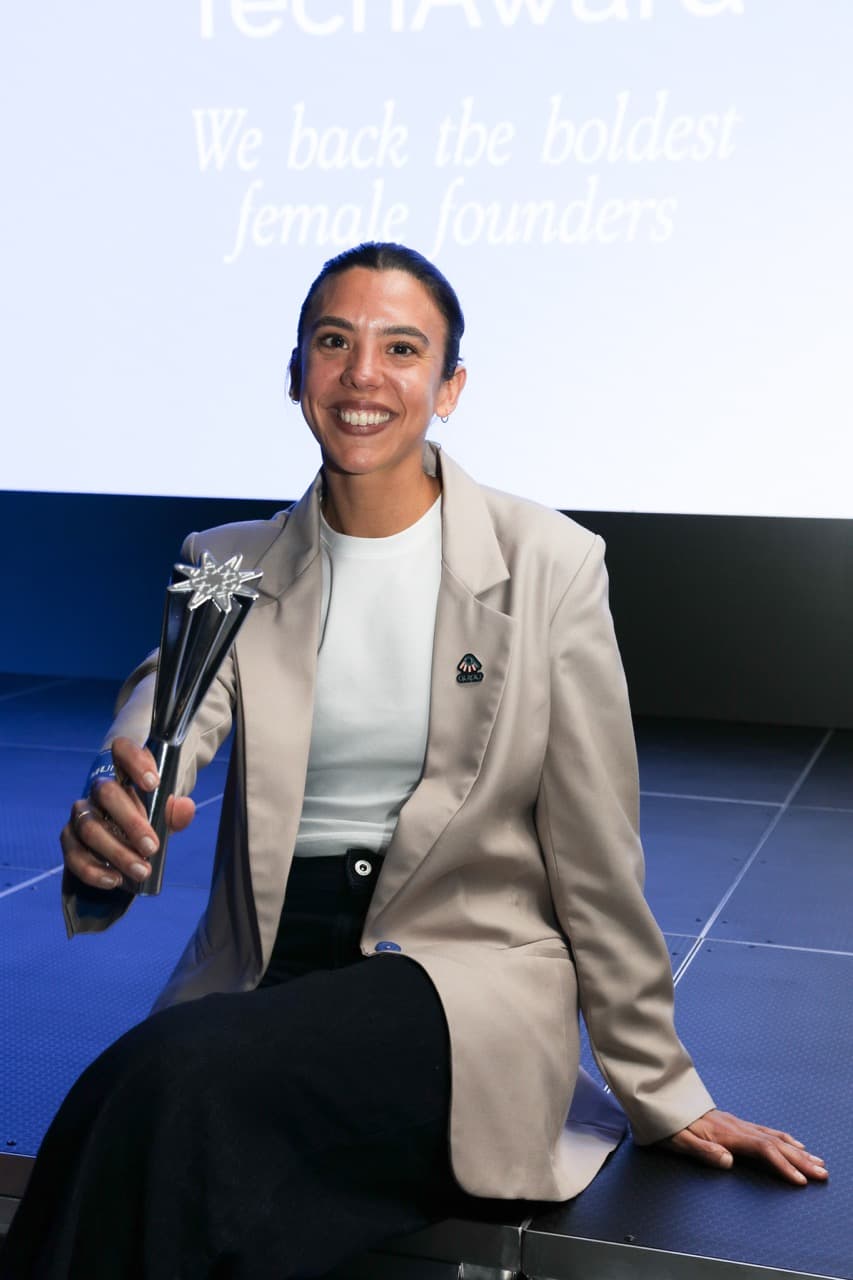
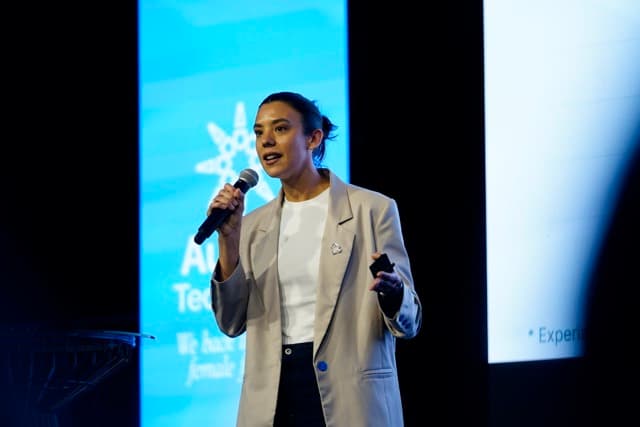
Mercedes Bidart is the founder of Quipu and the winner of the 2026 Aurora Tech Award. The Aurora Ventures team spoke to her just after her win to find out more about Mercedes’ journey to becoming a founder, the people who’ve helped along the way, and what Quipu does.
About the people behind her: I am who I am because of my parents. They have always supported me… Quipu was a small idea, but.. it was very important to me. My dad is an entrepreneur. He told me, "Why don't you go to Colombia and just do your business, just do your dream? That gave me the energy to say, I need to go to Colombia and make this happen.
There were a lot of moments when things were not working at all. Having the support of my husband in all that process was really important.
On being a women founder: Working at a think tank, an NGO, studying at the academia where women succeed pretty well, I never felt [any difficulties due to gender discrimination] – up until I got into the world of business!
After a year and a half … I started gaining confidence … but I needed to find a coach, therapy [anything] that could help me to get that confidence in the business world.
Why initiatives like the Aurora Tech Award are necessary: I think that the most valuable thing about these prizes is that [afterwards] we don't need to explain ourselves. There's someone else validating us. It's assuring the world who we are, and making those connections that it might be very difficult to do from scratch.
I got a lot of support from men. We need to acknowledge that men are opening a lot of doors to us … and some of them are hearing us. They don't care if we are women or men. They are our champions. So we need to recognize them.
My main mentor leads the MIT SinX incubator…Her name is Zwafa. She's from Iceland. She sold two companies for a lot of money, she has kids, a husband and she's a great supporter for me.
I would love to be the one supporting new generations. Women from older generations had to face the inevitability of living in this dog eat dog world... This is why we don't have many examples… but I'm happy we are changing the situation now.
About Quipu: The informal economy makes up around 60% of the world’s population. Because they don’t have a financial history or have a damaged financial history, many are not able to access a loan at a traditional bank. So we built an alternative way of assessing the risk of workers and micro businesses by looking at their present live data, videos of their businesses, text messages, transactions, and social media. By using this information and AI models, we can predict if someone will pay or not.
Based on this data we provide loans… We also sell the technology to other financial institutions, so they can double the impact and approve more people.
Serving people on the move: We got impact-linked finance from an organization called Roots of Impact, focused on migration and refugees, “people on the move”... With this financing structure, we said let's start building a new score just for migrants … because we were rejecting most of them. We started looking at what data we could capture from migrants differently…asking for the same type of data we were asking from the other people, but also some types of data characteristic of migrants. So we are training the model, and this year we plan to grow our migrant population to 10% of our clients.
The world is changing due to the climate crisis and the wars that are taking place. The migration dilemma is one of the most difficult and urgent problems that every government will be facing.
A message for would-be women founders: If we want to see a different world, then we need to create new things that are more aligned with women’s values, solutions that have more empathy. We've seen that in the 10 finalists of the Aurora award – all of us are doing some kind of social impact.
Watch the full interview on YouTube.
Interview by Sima Piterskaia, Aurora.
Edited by Natalie Watermeyer